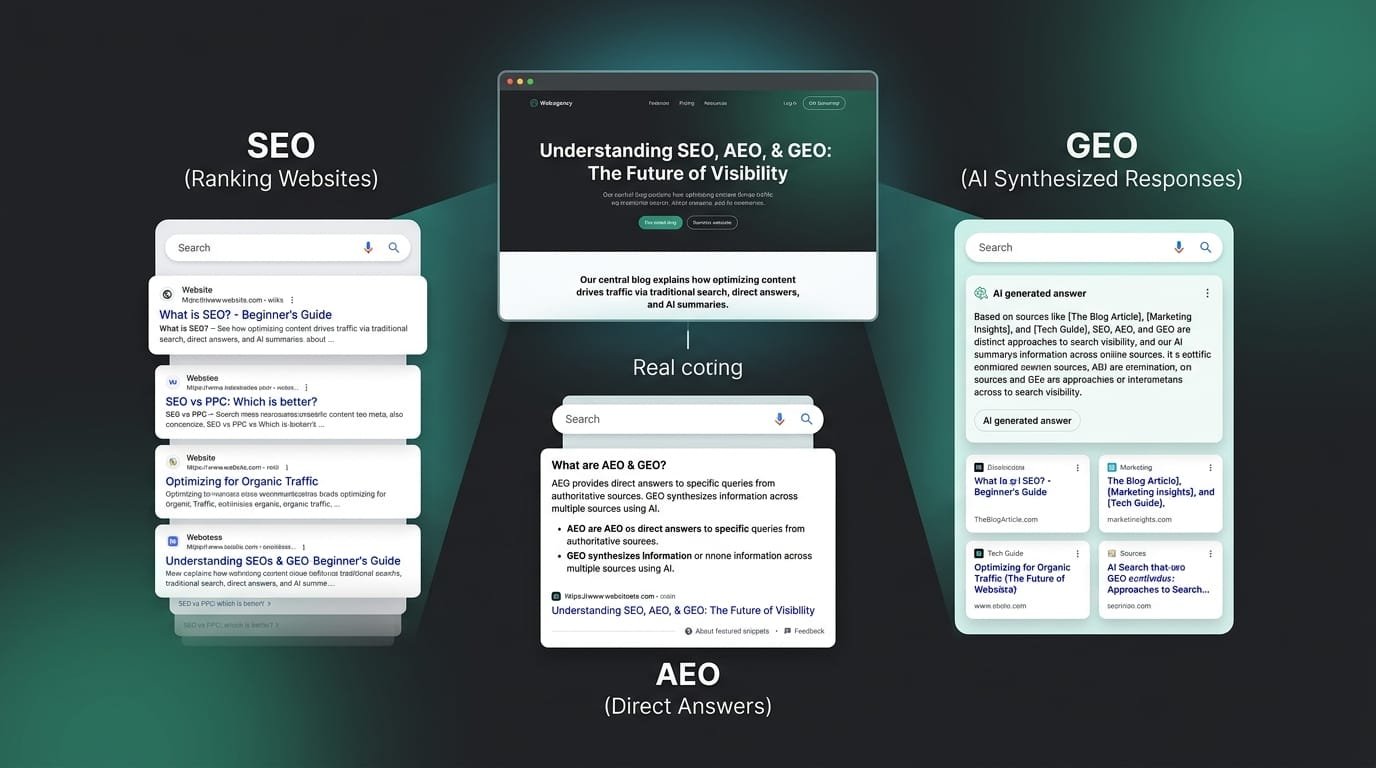
Search is no longer only about ranking a webpage in a list of links. AI Overviews, AI Mode and other answer-based search experiences are changing how information is discovered. That has brought three terms into the conversation: SEO, AEO and GEO.
SEO, AEO and GEO: What Is the Difference?
The names sound like three completely different marketing strategies, but in reality they overlap heavily.
The important point is that businesses do not need three separate websites or three completely different strategies.
A technically strong page with useful information, clear answers and original expertise can support all three at the same time.
Why Has AEO Become More Important?
Search queries are becoming much more conversational. Instead of typing only a few keywords, users can ask detailed questions and expect a useful answer immediately.
This means content should be written around the questions customers actually have.
Instead of creating a page just because the keyword “SEO Moldova” exists, think about the actual questions behind it: How much does SEO cost? How long does it take? Does a local business need SEO? What should be fixed first?
What Does GEO Actually Change?
GEO has become popular because AI Search can combine information from several sources instead of presenting only one webpage as the answer.
That makes clarity and originality increasingly valuable. A generic article that repeats information available on hundreds of other websites gives a search system very little reason to consider it distinctive.
Businesses have an advantage when their websites include information based on real experience:
- original examples and case studies;
- clear explanations from specialists;
- local knowledge and market experience;
- real images, screenshots or demonstrations;
- specific answers to customer questions;
- information that is difficult to find elsewhere.
How to Optimise a Website for AI Search
1. Keep the SEO foundation strong
AI Search does not make technical SEO irrelevant. Search engines still need to discover, crawl and understand your pages.
Indexing, internal linking, mobile usability, redirects, canonical URLs and site structure still matter.
2. Answer questions clearly
Do not force visitors to read five paragraphs before reaching the useful information. If a section asks a question, answer it directly and then add the necessary detail.
3. Build pages around topics, not only exact keywords
Search conversations can contain much more context than traditional queries. A good page should therefore explain the complete subject instead of repeating one phrase simply because it has search volume.
4. Demonstrate real experience
AI can generate generic explanations extremely quickly. Real expertise, practical examples and knowledge gained from actual projects are much harder to replicate.
5. Connect informational content with your services
Blog articles can attract people while they are researching a problem, but there should always be a logical next step toward a relevant service, consultation or contact page.
Do You Need a Separate GEO Strategy?
Probably not in the way some marketing headlines suggest.
Google itself continues to emphasize that established SEO best practices remain relevant for its generative AI search features. There is no hidden GEO switch that suddenly makes a website visible inside AI answers.
A better approach is to treat GEO and AEO as extensions of good SEO: improve the technical foundation, answer questions clearly and publish information worth referencing.
Not Sure Whether Your Website Is Ready for AI Search?
You can read about SEO, AEO and GEO for hours, but understanding what actually matters for your own website is much easier when we look at it directly. Bamboo can review your current SEO and show you which changes are worth prioritising.
Explore Our SEO ServicesSEO Is Evolving, Not Disappearing
SEO, AEO and GEO are different ways of describing an increasingly connected search environment.
Traditional rankings still matter. Clear answers matter more than before. And AI systems create another way for useful websites to be discovered.
Instead of chasing every new acronym, businesses should focus on building websites that are technically healthy, easy to understand and genuinely useful to the people searching for their services.