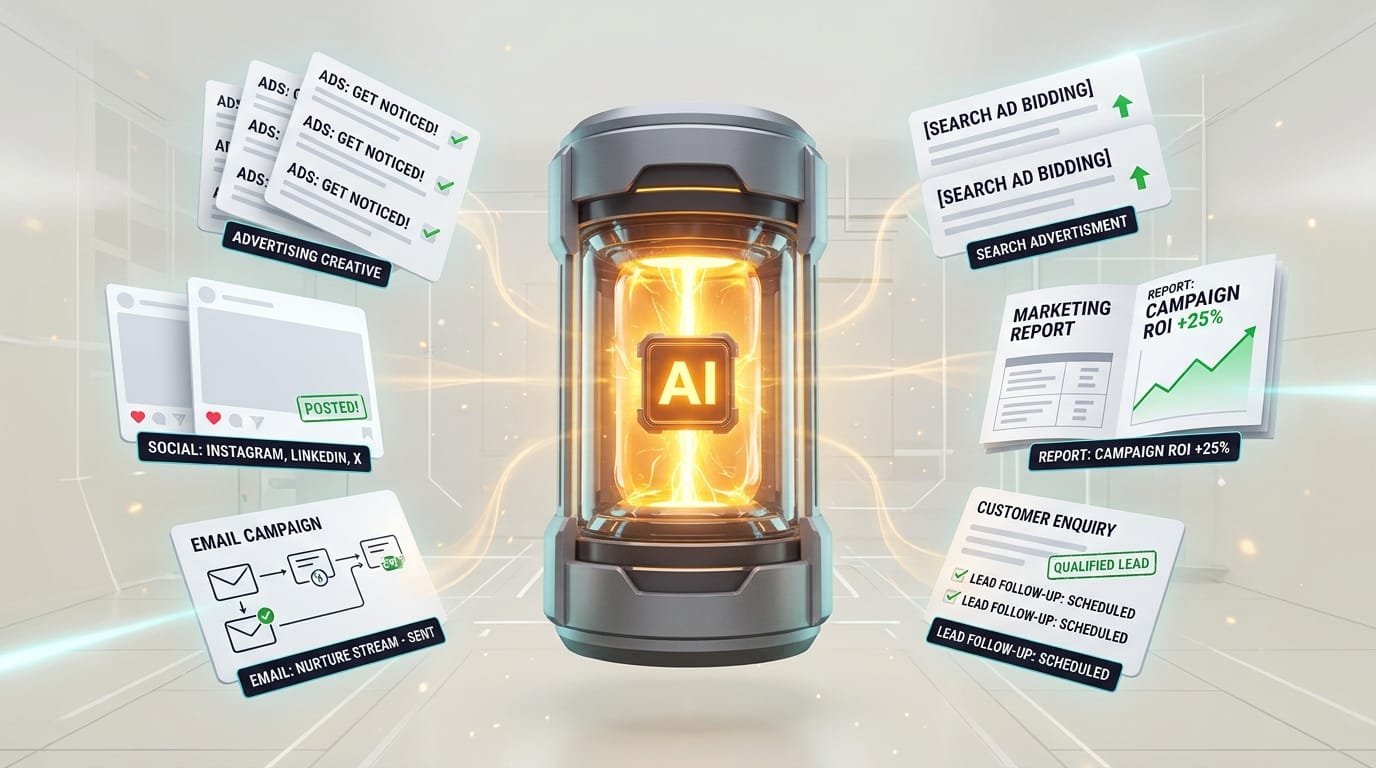
AI is already part of everyday marketing work. Businesses can use it to research ideas, create variations, optimize advertising, analyze data and organize leads. The useful question in 2026 is no longer whether AI can help marketing — but which tasks are actually worth automating.
Automation Is Best at Repetitive Work
The strongest use cases are usually tasks that happen frequently, involve a lot of information or require many similar variations.
That is why AI is already particularly useful in content preparation, advertising and reporting.
Content Production Can Move Much Faster
AI can help businesses move from an idea to a usable first draft in a fraction of the time previously required.
It can organize research, suggest angles, build article structures and produce several versions of the same marketing message.
The advantage is speed. The risk is generic output.
Advertising Is Already Highly Automated
Paid advertising has been moving toward automation for years, and AI is accelerating that shift.
Platforms can already automate bidding, expand targeting, adapt ad messages and use conversion data to decide where budget is most likely to create value.
Google Ads AI Max is one example: the advertiser provides business data, landing pages and campaign direction, while AI can help discover additional relevant searches and adapt campaign assets.
AI Can Also Make Reporting Less Painful
Marketing teams spend a lot of time moving numbers between dashboards, spreadsheets and reports.
AI can summarize those results, compare time periods and highlight unusual changes before a person begins deeper analysis.
That makes reporting faster without pretending that a generated summary automatically explains why the business changed.
Where AI Should Stop
Automation is useful when the desired outcome is clear. It becomes much less reliable when the task requires business context, responsibility or judgment.
- major budget decisions;
- brand positioning;
- sensitive customer communication;
- pricing strategy;
- final creative approval;
- deciding what the company should actually promise.
Lead Management Can Become Faster Too
When a business receives enough enquiries, sorting and summarizing them can become a repetitive task of its own.
AI can help organize leads by service, location or enquiry type and prepare useful summaries before a salesperson responds.
It can also assist with follow-up drafts and help identify enquiries that appear more commercially relevant.
How Far Should a Business Automate?
Not every company needs the same level of automation.
A small business may only need help with content preparation and reporting. A larger marketing operation may automate advertising optimization, lead routing and parts of customer research as well.
Start Small Instead of Automating Everything
The easiest way to waste time with AI is to automate a process simply because automation is available.
Start with one repetitive task that takes too much time.
Measure whether automation actually makes it faster, cheaper or more useful. If it does, expand from there.
AI Tools Are Useful. A Marketing System Is Better.
Bamboo can help businesses connect advertising, SEO, lead generation and digital marketing into a system where automation supports the strategy instead of becoming the strategy itself.
Explore Digital Marketing ServicesFinal Thought
AI marketing in 2026 is already practical.
Businesses can automate meaningful parts of content creation, advertising, reporting and lead handling today.
The biggest advantage will not come from automating everything. It will come from removing repetitive work while keeping strategy and judgment in the right hands.