
Digital advertising has traditionally been organized around searches, feeds, videos and websites. ChatGPT introduces another advertising environment: a conversation in which people explain what they need, compare alternatives and make decisions using far more context than a single keyword can normally provide.
ChatGPT Advertising Is No Longer Just a Future Scenario
For years, marketers discussed the possibility that conversational AI could eventually become a new advertising channel.
That transition has already started.
OpenAI began testing ads in ChatGPT in the United States in February 2026 and has since expanded the advertising platform internationally. Businesses can now run campaigns through ChatGPT Ads Manager in supported markets.
This creates a fundamentally different environment from traditional search and social advertising because the commercial opportunity can appear while the user is already explaining a problem, comparing options or making a decision.
What Does Advertising in ChatGPT Actually Look Like?
The core experience is deliberately separated from the assistant's answer.
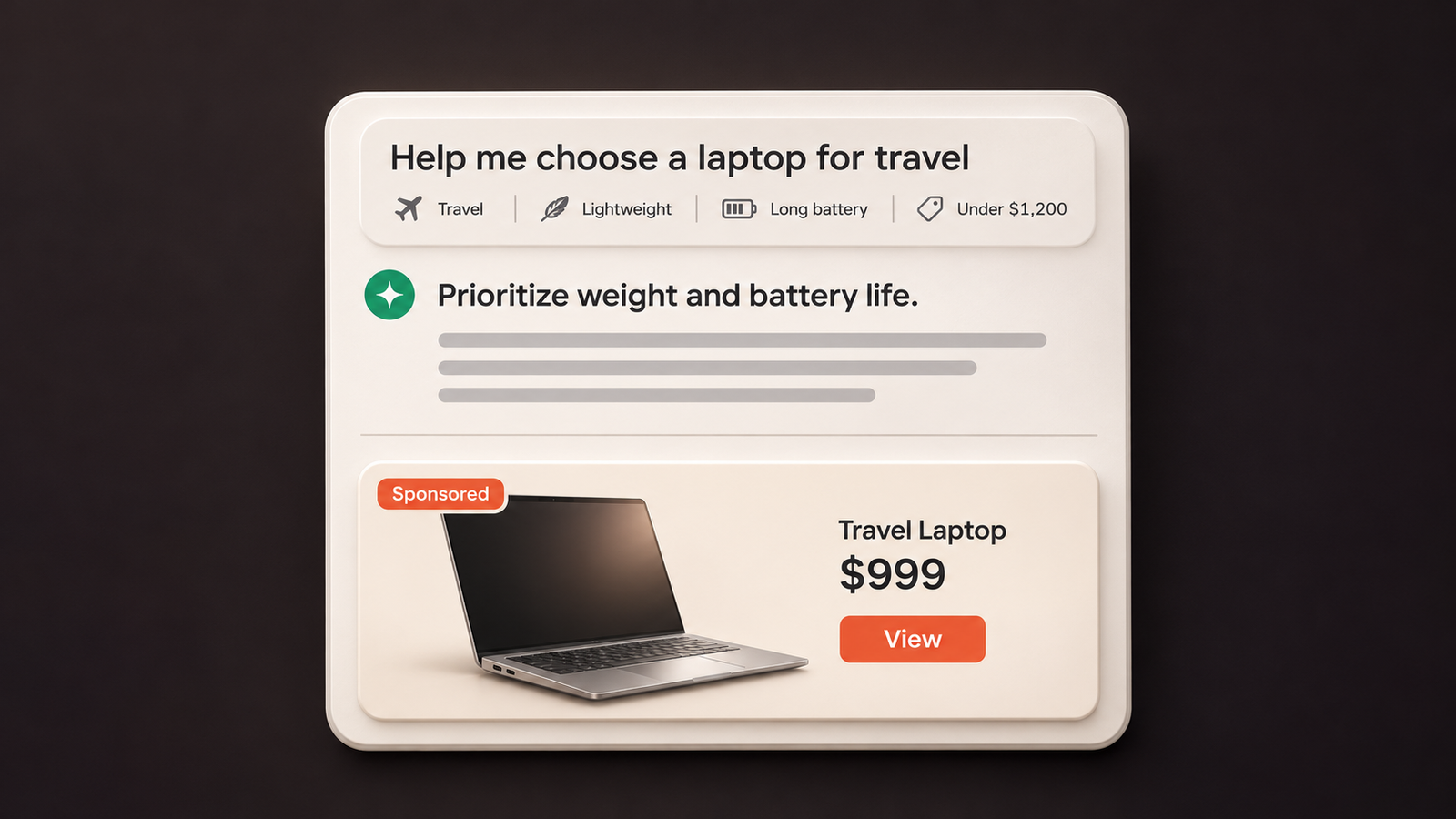
A user asks ChatGPT a question and receives the normal response. When an eligible commercial opportunity is relevant, a clearly identified sponsored advertisement can appear below that response.
The advertiser does not purchase a place inside the actual answer, and an advertisement does not mean that ChatGPT recommends or endorses that brand.
The assistant responds to the user's question.
The commercial message is presented separately from the answer.
The Biggest Difference Is Context
Traditional search advertising often begins with a short query.
A person might type “best laptop,” “accounting software” or “hotel in Barcelona.” Advertisers then compete to appear around that intent.
A ChatGPT conversation can contain significantly more information.
The user might explain what they need, what they have already considered, what they cannot afford, what matters most and which trade-offs they are willing to accept.
Advertising Can Become Relevant to the Problem, Not Just the Search Term
A keyword tells an advertising system what someone typed.
A conversation can provide additional context about why they are searching, what constraints they have and what kind of solution might actually be useful.
That does not eliminate targeting or optimization. It changes the quality of the intent signal available when an advertising opportunity is evaluated.
How ChatGPT Ads Differ From Traditional Search Advertising
ChatGPT Ads Already Have Familiar Performance Marketing Tools
Although the environment is new, the advertising platform is developing many of the components marketers already expect from performance media.
The Creative Strategy Will Need to Change
An advertisement shown during a conversation has a different job from a banner designed to interrupt a feed.
The user may already have explained the problem in detail.
An advertisement that responds with generic brand language such as “Discover the future today” provides very little additional value.
The stronger approach is to communicate exactly why the product or service is relevant to the situation the user is trying to solve.
The advertiser should make it clear what the product does, who it is for and when it is useful rather than depending only on attention-grabbing creative.
Intent Could Become More Valuable Than the Keyword
Search advertisers have spent years building strategies around keyword intent.
ChatGPT introduces another possibility: understanding intent through the structure of a conversation.
Someone asking about “CRM software” may be at a very different stage from someone who explains that they manage a 15-person sales team, currently use spreadsheets, need WhatsApp integration and want to migrate within two months.
Those conversations may contain the same broad topic but represent very different commercial opportunities.
AI-native advertising can potentially distinguish those situations more effectively than systems that depend primarily on isolated keywords.
This Creates New Opportunities for Businesses
Sponsored Agents Could Make Advertising More Interactive
One of the most interesting developments is OpenAI's testing of Sponsored Agents.
Instead of clicking an advertisement and immediately leaving for another website, a user can begin a conversation with a business-sponsored agent.
That creates a very different customer journey.
A potential customer could discover the advertiser through a relevant ad, ask questions about the offering and continue evaluating the product through an interactive brand experience.
An Advertisement Could Become the Beginning of a Brand Conversation
Traditional advertising usually ends when the user clicks.
A sponsored AI agent could make the click the beginning of the interaction: the customer can ask, compare and clarify before deciding whether to move toward the next commercial step.
ChatGPT Advertising Also Creates New Brand Challenges
A highly contextual advertising environment raises the standard for relevance.
If a user has spent several minutes describing exactly what they need, an unrelated or generic advertisement will feel particularly obvious.
Brands will therefore need stronger product information, better landing experiences and more precise messaging.
It may become less effective to create one generic advertisement and expect it to work across every stage of the customer journey.
Trust Is More Important in an AI Conversation
People often use AI assistants to ask questions, explore unfamiliar topics and evaluate choices.
Introducing advertising into that environment creates an important trust requirement: users need to understand where the assistant's response ends and where the commercial placement begins.
OpenAI therefore separates advertisements from ChatGPT responses and labels them as ads. Advertising does not determine or alter the answer the model provides.
Brands should not treat an advertisement appearing near a ChatGPT answer as permission to imply that ChatGPT or OpenAI has independently endorsed the advertiser, product or claim.
Who Currently Sees ChatGPT Ads?
OpenAI's current advertising model focuses on its ad-supported consumer experience.
Ads can appear for eligible users on the Free and Go plans. Paid plans such as Plus and Pro, as well as Business, Enterprise and Edu, do not currently show ChatGPT Ads.
Ads are also not shown to accounts identified as belonging to people under 18.
Availability continues to depend on country and the ongoing expansion of the advertising platform.
Measurement Will Still Decide Whether the Channel Matters
A new advertising format can generate curiosity, but marketers eventually need to know whether it creates real business value.
ChatGPT Ads Will Not Simply Replace Google or Meta
These platforms capture different forms of attention and intent.
Google remains powerful when someone explicitly searches for a product, business or solution.
Meta can create demand while people consume social content.
ChatGPT occupies another type of moment: the user may be thinking through a problem, asking for advice, comparing alternatives or trying to decide what fits their situation.
That makes AI-native advertising more likely to become another important layer in the digital marketing mix rather than a simple replacement for every existing channel.
Marketers Will Need to Think Beyond Keywords
The shift toward conversational advertising changes the questions marketers should ask.
Instead of only asking which keywords customers search, businesses may need to understand which problems customers describe, which constraints they mention and which questions appear before the final buying decision.
Customer research, sales conversations, support questions and real language used by buyers can therefore become even more valuable inputs for advertising strategy.
AI Search Visibility and Paid Advertising Will Exist Side by Side
Brands also need to distinguish between being naturally mentioned in an AI answer and purchasing an advertising placement.
Organic AI visibility depends on whether the brand is relevant to the assistant's answer and the information available to the system.
ChatGPT Ads are paid commercial placements shown separately.
Businesses may therefore eventually manage two distinct strategies inside AI platforms: earning organic visibility through strong digital authority and purchasing advertising when relevant commercial inventory is available.
AI Conversations Are Becoming Part of the Customer Journey
Bamboo helps businesses connect paid advertising, content, lead generation and digital strategy around measurable customer acquisition — so new channels can be evaluated by the business results they create rather than by novelty alone.
Explore Digital Marketing ServicesFinal Thought
ChatGPT advertising represents more than another location for digital ads.
It introduces advertising into an environment where customers naturally explain their goals, constraints and questions in much greater detail than they usually provide in a search box.
That creates the possibility of advertising based on conversational intent: reaching people not simply because they typed a keyword, but because a product or service is relevant to the problem they are actively trying to solve.
The long-term impact will depend on relevance, user trust, measurement and whether advertisers can create commercial experiences that genuinely add value to the conversation.