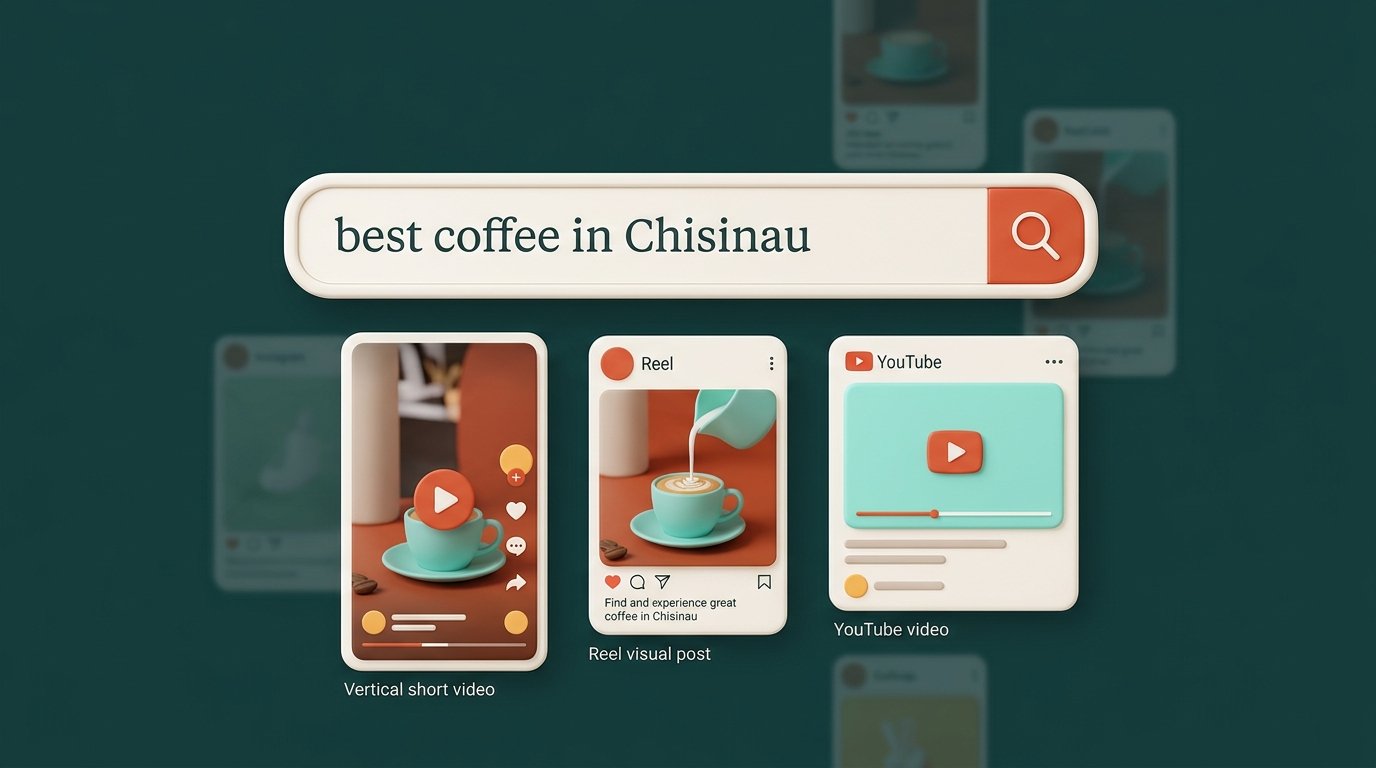
Search behaviour is no longer limited to Google. People increasingly use TikTok, Instagram and YouTube to find products, places, tutorials, recommendations and answers — which means social content needs to be discoverable as well as engaging.
Social Platforms Are Becoming Search Engines
Social media used to be viewed primarily as a feed: users followed people, opened the app and consumed whatever appeared next.
That behaviour still exists, but search has become a much bigger part of the experience.
Users now actively search for restaurant recommendations, product reviews, travel ideas, tutorials, local businesses and answers directly inside social platforms.
TikTok's own 2026 trend research says billions of searches happen on the platform every day, while YouTube has long treated search as one of its major discovery systems.
Good Social Content Needs to Be Understandable Before It Can Be Found
Platforms increasingly use the information inside and around content to understand what it is about.
Titles, captions, spoken words, on-screen text, hashtags, descriptions and audience behaviour can all help provide context.
Social Search Optimization is therefore less about stuffing keywords and more about making the subject of your content unmistakably clear.
Think About Search Intent Before Creating the Post
The easiest way to optimize social content for search is to begin with the question the audience is trying to answer.
Instead of starting with “What should we post today?”, start with: “What would our potential customer type into the search bar?”
A cleaning company might target questions about removing stains. A restaurant might create content around where to eat in a specific city. A marketing agency might answer questions about Google Ads, SEO or lead generation.
Give Platforms Clear Context
Optimize for the Words People Actually Search
TikTok search has become a major discovery surface for brands, creators and products.
Relevant keywords can appear naturally in captions, video text, cover text, hashtags and spoken content.
TikTok's own tools now analyze captions, hashtags, voiceover and text inside videos when identifying brand-relevant content. That is another reason to make the topic clear throughout the actual video rather than relying only on hashtags.
The goal is not to repeat one phrase everywhere. It is to make the video's subject understandable in several natural ways.
If someone searches for the phrase you are targeting, the post itself should genuinely help answer that search.
Make Your Brand and Content Topics Easy to Understand
Instagram discovery increasingly extends beyond followers and the home feed.
For brands, that makes consistency especially valuable. Your profile, captions, Reels and recurring content themes should make it obvious what the business does and which subjects it is relevant to.
Use natural descriptive language in captions and profile information instead of relying entirely on clever copy that provides no context.
Location can also matter for businesses serving a specific city or region. A local business should make that local relevance easy for both users and the platform to understand.
YouTube Search Still Rewards Relevance and Viewer Satisfaction
YouTube explicitly describes relevance, engagement and quality as major parts of its search ranking system.
The platform considers how well elements such as the title, description and video content match the viewer's search.
That makes clear searchable titles particularly important. The title should accurately describe what viewers will receive rather than hiding the topic behind vague clickbait.
YouTube also recommends identifying one or two important words for a video and using them prominently in both the title and description.
Put the Main Search Idea Near the Beginning
Users decide quickly whether a piece of content matches what they wanted.
If the topic takes 30 seconds to become clear, many viewers will leave before reaching the useful part.
Introduce the question, subject or result early. This helps both the viewer and the platform understand why the content is relevant.
Build Content Around Searchable Questions
Do Not Turn Social Search Into Old-School Keyword Stuffing
Search optimization does not mean putting the same keyword into every sentence, caption and hashtag.
Platforms still care about whether users actually watch, engage with and find value in the content.
A perfectly optimized title cannot rescue a video that fails to deliver on its promise.
Optimize for clarity first, then make sure the content deserves the viewer's attention once it appears in search.
Use Search Suggestions as Content Research
Search bars themselves can reveal how people phrase questions and which related topics they explore.
TikTok also provides advertisers and businesses with search keyword and search-insight tools, while YouTube Analytics can show search terms viewers used to discover videos.
Those signals can help brands build content around actual demand rather than guessing what people might search for.
One Topic Can Work Across Multiple Platforms
Social Search Optimization does not mean creating three completely unrelated strategies.
The same customer question can become a fast TikTok explanation, an Instagram Reel and a deeper YouTube video.
The core search intent stays the same while the format changes to suit the platform.
Measure More Than Views
Social Search and Traditional SEO Are Becoming More Connected
Customers rarely use only one discovery channel.
Someone may see a business on TikTok, search its name on Instagram, watch a longer YouTube review and eventually visit the website through Google.
That means search visibility should increasingly be considered across the whole digital presence rather than only inside traditional web search.
Social Visibility Starts With Understanding What Your Audience Is Looking For
Bamboo helps businesses connect content, SEO, advertising and digital strategy around real customer search behaviour — so the brand can be discovered across more than one platform.
Explore Digital Marketing ServicesFinal Thought
TikTok, Instagram and YouTube are no longer only places where people wait for content to appear in their feeds.
They are increasingly places where users actively look for answers, products, recommendations and businesses.
Brands that make their topics clear, understand search intent and create content that genuinely answers those searches have a better chance of being discovered when the customer is actively looking.