

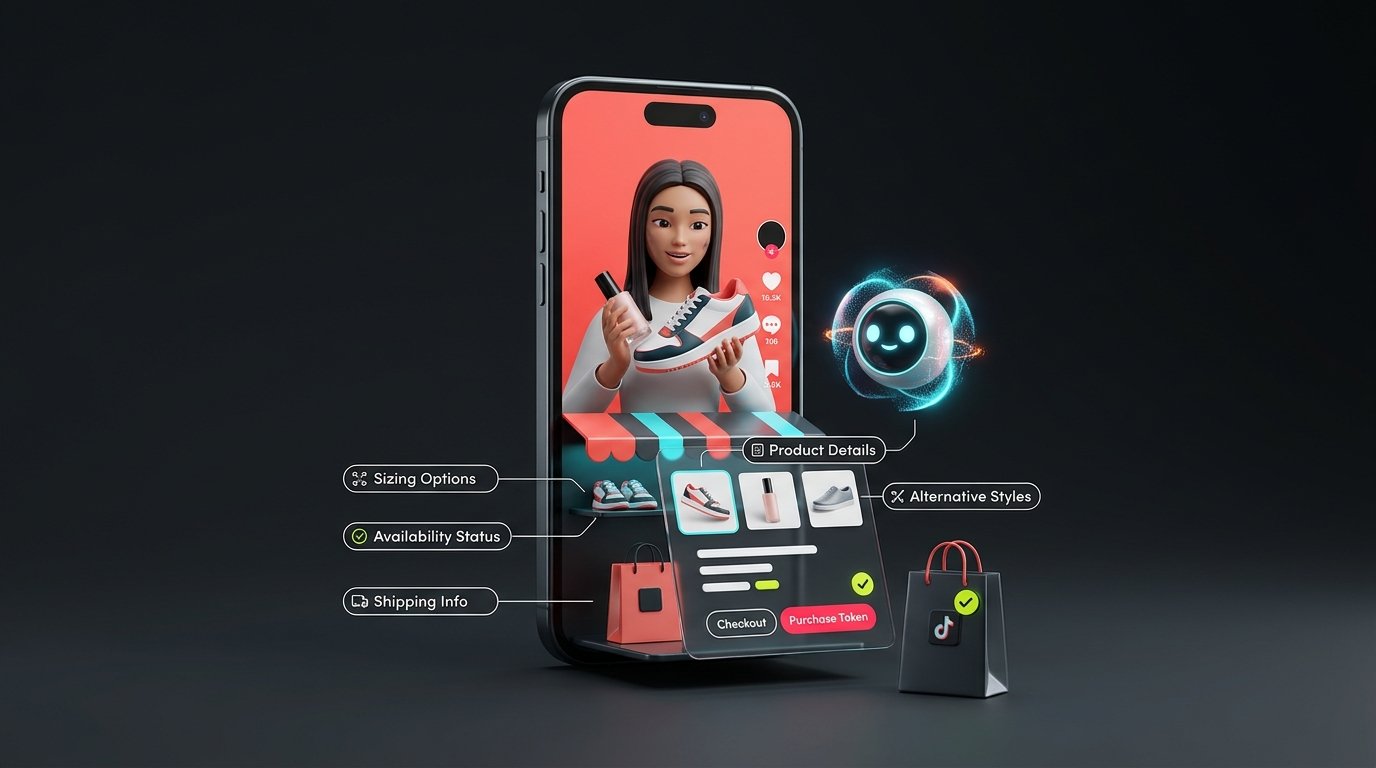
Social platforms are moving closer to becoming complete shopping environments. Instead of discovering a product in a video, leaving the app, searching for more information and completing the purchase somewhere else, more of that journey can now happen inside the same experience.
Social Commerce Is Collapsing the Customer Journey
Traditional ecommerce often separates product discovery from the purchase itself.
A customer sees an advertisement or recommendation, visits another website, searches through product pages, checks delivery information and eventually reaches checkout.
Social commerce removes more of those transitions.
TikTok Shop, for example, connects products directly with short videos, livestreams and creator content so that discovery and shopping can happen much closer together.
From Watching a Video to Buying the Product
Short-form video creates a different type of shopping journey from a traditional online store.
The customer may not begin by actively searching for a product at all. They may discover it through entertainment, a creator recommendation, product demonstration or trend.
TikTok describes this model as discovery-led commerce: products can appear naturally inside the content people are already watching, while shopping features shorten the distance between discovery and purchase.
Social Platforms Are Becoming Shopping Environments, Not Just Traffic Sources
For years, the job of social advertising was often to attract attention and send the customer somewhere else.
Social commerce changes that model. The content, product discovery, recommendation, product evaluation and transaction can increasingly happen within one connected environment.
That gives platforms more influence over the entire customer journey — not only the first click.
Where AI Shopping Assistants Fit In
Removing the external website does not remove the questions customers have before purchasing.
They may still want to know whether an item is available, which size is appropriate, how delivery works or which option best fits their needs.
This is where conversational shopping assistants become important.
TikTok's Shopping Assistant is designed to provide real-time guidance around product details, shipping, sizing, availability and purchasing while keeping the user within the shopping experience.
The Goal Is to Remove the Guidance Gap
Social content is excellent at creating interest quickly.
But that interest can disappear when the customer has to leave the experience, research the product manually and reconstruct the purchase journey elsewhere.
TikTok describes its agentic commerce tools as a way to close this gap by bringing product assistance and purchasing closer to the original moment of discovery.
Opening another website, finding the same product again, searching for delivery information and entering a separate checkout flow all add friction after the original interest has already been created.
Direct Buying Changes the Role of the Website
Websites are not disappearing, but they may no longer be required for every social-commerce transaction.
TikTok has also announced Buy Direct, an in-app purchasing experience designed to let eligible shoppers move from the For You feed toward a direct purchase without the traditional multi-step journey to an external ecommerce site.
This means brands increasingly need to think about where the transaction should happen rather than assuming that every social interaction must end with a website visit.
The Customer Journey Is Changing
Why This Matters for Brands
Social commerce changes what brands need to optimize.
It is no longer enough to create a video that earns views and clicks. The content itself can become the beginning of a commercial experience.
That makes product presentation, creator partnerships, product information and checkout readiness part of the same performance system.
If AI assistants and social platforms are expected to help customers choose products, accurate titles, descriptions, availability, pricing and shipping information become increasingly important marketing inputs.
Creators Become Even Closer to the Point of Sale
Creator marketing has traditionally influenced demand while the actual transaction happened elsewhere.
Shoppable videos reduce that separation.
A creator can demonstrate a product, create interest and give the viewer a direct route toward purchasing the exact item being shown.
That also makes commercial measurement more interesting because content performance can be evaluated closer to actual shopping behavior rather than only views and engagement.
AI Is Also Changing the Seller Side
The use of AI in social commerce is not limited to the shopper.
TikTok Shop has been expanding AI assistance for sellers and creators as well. Its Seller Assistant has evolved toward an agentic model that can use shop context to provide guidance and, with permission, help take actions across areas such as products, orders and shop operations.
Creator and Video Assistant tools can also help with product discovery, hooks, scripts, product highlights and other parts of creating shoppable content.
What Businesses Need to Prepare For
Does This Mean Every Brand Should Sell Directly Inside Social Media?
Not necessarily.
Some products are ideal for fast discovery-led purchases. Others require consultation, detailed research, customization or a longer decision cycle.
Availability of individual TikTok commerce features also depends on market, account and eligibility.
The strategic question is therefore not whether websites will disappear. It is how much of each customer's journey can usefully happen before the customer ever needs to leave the social environment.
Social Media Is Becoming Part of the Transaction, Not Just the Promotion
Bamboo helps businesses connect content, advertising and customer acquisition around measurable outcomes — so emerging social-commerce channels can be evaluated by the customers and revenue they generate, not only by reach and engagement.
Explore Digital Marketing ServicesFinal Thought
Social commerce is shortening the distance between inspiration and transaction.
TikTok Shop makes content itself shoppable, while emerging AI shopping assistants can help answer the questions that normally force customers to leave the platform and continue researching somewhere else.
The result is a customer journey where watching, discovering, evaluating and purchasing can increasingly feel like different moments inside the same experience rather than separate stages across different websites.