You have launched the ads and earned the click. Now comes an important decision: should that visitor land on a dedicated campaign page or enter your main website? The best destination depends on what the user wants and what you want them to do next.
There Is No Universal Winner
Landing pages are often associated with paid advertising because they can keep the visitor focused on one objective.
That does not mean every paid click should automatically be sent to a standalone landing page.
Sometimes a visitor needs to compare services, understand the company, inspect previous work or research the business before making a decision. In those situations, the website itself may be the better destination.
What Is the Real Difference?
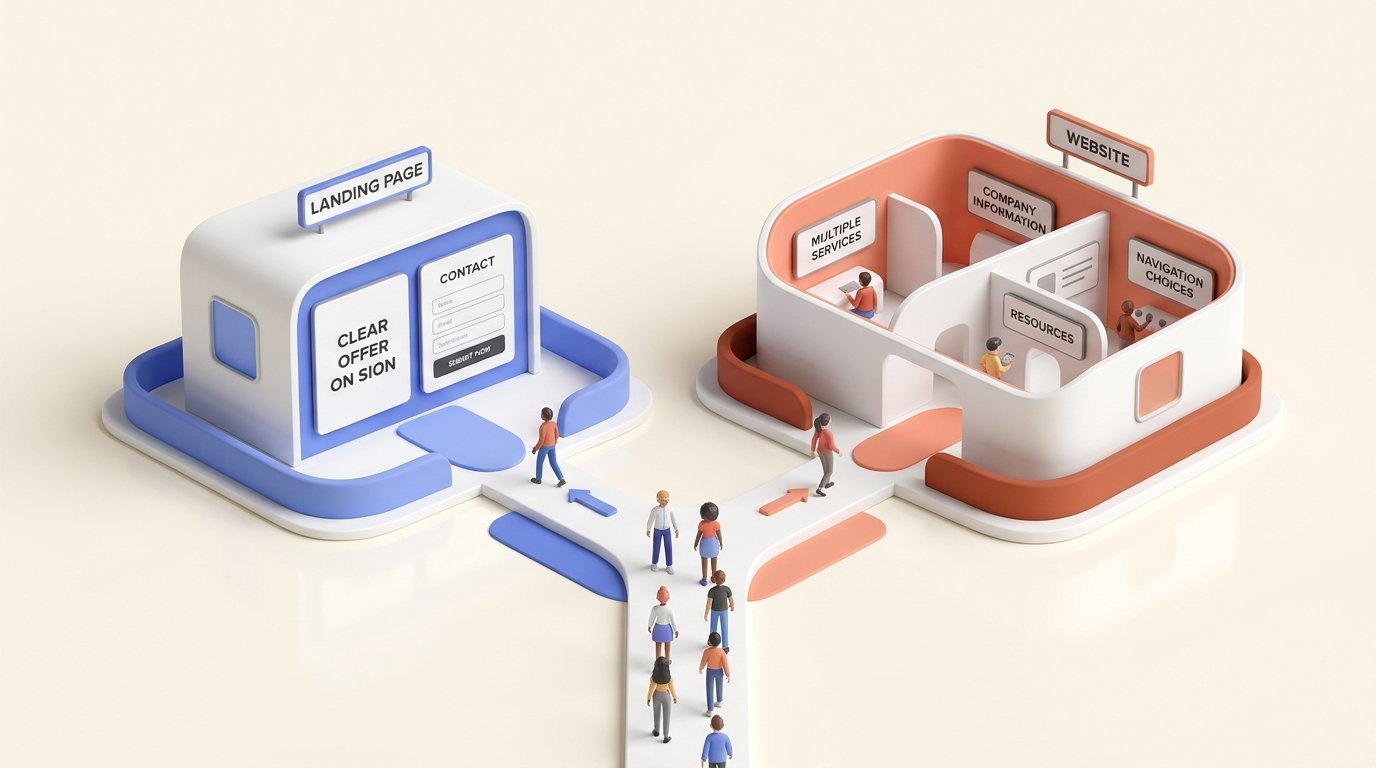
A dedicated page removes many unrelated choices and directs the visitor toward a specific action such as requesting a quote, booking a consultation or purchasing one offer.
A full website lets visitors inspect services, company information, case studies, content and other pages before deciding what they want to do.
When a Landing Page Usually Makes More Sense
A landing page becomes particularly useful when the advertising message is highly specific.
If someone clicks an ad for one particular service, product or promotion, sending that person to a page built around the exact same offer can create a more continuous experience.
When the Main Website Can Be Better
Not every customer is ready to submit a form after reading one short page.
Some purchases require more trust, more information and more comparison.
A website gives those users freedom to research the company at their own pace.
Do Not Choose the Destination Based on Page Type Alone
Ask what the person who clicked the ad is likely trying to achieve.
Someone searching for a very specific service may benefit from a focused landing page. Someone searching for a company, comparing several services or making a high-consideration decision may need the broader context of a website.
The objective is not to force every visitor through the shortest path. It is to remove unnecessary friction from the path that fits their intent.
Different Searches Deserve Different Destinations
Why Sending Everyone to the Homepage Often Fails
A homepage has to serve many different visitors.
It may introduce the company, link to several services, feature recent content and communicate the overall brand.
That flexibility is useful for general visitors but can create unnecessary choices for someone who just clicked a highly specific advertisement.
Instead of continuing the ad message, the homepage may force the visitor to search for the same information again.
Sending paid traffic there simply because it is the main page of the website can weaken message match and make the customer journey longer.
A Landing Page Can Also Be Too Narrow
The opposite mistake is stripping so much information away that the visitor cannot properly evaluate the business.
A short landing page may convert poorly when customers need evidence, detailed specifications, examples of previous work or a better understanding of the company before contacting it.
Focus is valuable. Lack of useful information is not.
Your Landing Page Can Still Connect to the Website
Choosing a landing page does not necessarily mean trapping visitors on one isolated page.
Important supporting links can still give interested users access to reviews, case studies, company information or other credibility content.
The primary journey can remain focused while additional information stays available for people who need it.
Use the Campaign Goal to Make the Decision
Test the Destination, Not Just the Ad
Advertisers often test headlines, keywords, audiences and bidding while leaving the destination untouched.
But changing where the traffic lands can have a major effect on campaign economics.
If possible, compare different destinations using the same commercial objective and evaluate conversion rate, qualified lead rate and customer acquisition cost.
Measure Lead Quality as Well as Conversion Rate
A landing page that produces more forms is not necessarily better if those forms create poor-quality enquiries.
Likewise, a website journey with a lower immediate conversion rate may generate customers who understand the company better and are more prepared to buy.
The strongest destination is the one that contributes to useful business outcomes, not simply the page with the highest form-submission percentage.
Do Not Stop Optimising at the Click
Bamboo helps businesses connect paid advertising, landing pages and lead generation around the same objective — so campaign traffic reaches the experience most likely to turn interest into qualified customers.
Improve Lead GenerationFinal Thought
Landing pages and websites solve different problems.
A landing page can create a shorter and more focused route to conversion. A full website can provide the depth and freedom some customers need before they are ready to act.
Instead of asking which one is always better, ask which one best matches the intent behind each paid click.