Views and likes are easy to report, but they do not automatically tell you whether an influencer campaign created real business value. Measuring ROI means following what happens after the audience sees the content.
Influencer Marketing ROI Starts After the Like
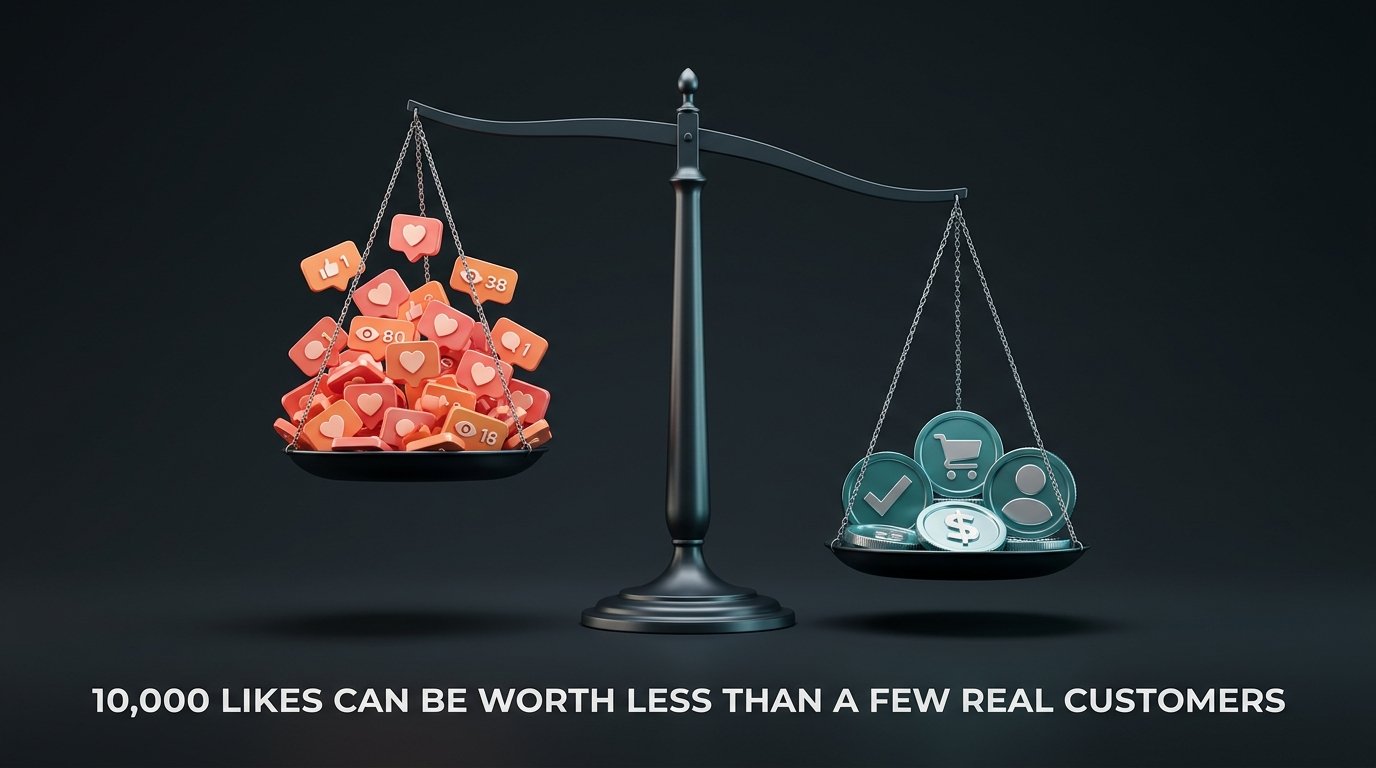
A campaign can generate thousands of reactions and still create very little commercial value.
Likes, views and comments are useful because they show whether the content attracted attention. The problem begins when those numbers are treated as the final result.
For performance-focused campaigns, the more important question is what the audience did next.
Start With a Clear Campaign Objective
ROI cannot be measured properly if the campaign never had a clear objective in the first place.
An awareness campaign may reasonably prioritize reach and video views. A sales campaign should be judged much closer to traffic, enquiries, purchases or revenue.
Before selecting the creator, define what success should look like.
Views Are Useful — But Only as the First Layer
Reach and views tell you how many people potentially encountered the promotion.
They help compare the scale of creators and understand whether the content actually reached the expected audience.
But a view does not tell you whether the person was interested, qualified or likely to become a customer.
Engagement Needs Context
Likes and comments can reveal whether followers paid attention, but not all engagement has the same value.
A comment saying “nice video” is different from someone asking where the product can be purchased, how much it costs or whether delivery is available.
Commercial questions, saves, shares and direct messages may provide much stronger signals of interest than raw engagement volume.
Move From Social Metrics to Customer Actions
The strongest influencer reports connect the content with what happens outside the social platform.
Website visits, tracked links, enquiries, bookings, promo-code usage and purchases help show whether attention turned into something the business can actually use.
The closer the metric is to revenue, the more clearly it can answer whether the campaign was commercially effective.
Use Trackable Links Wherever Possible
Unique URLs or UTM parameters can help identify traffic coming from a particular creator or campaign.
This allows the business to compare not only how many people visited the website, but also what those visitors did after arriving.
Look at meaningful actions such as form submissions, product views, bookings or purchases rather than traffic volume alone.
Promo Codes Can Connect Content to Sales
Unique promo codes can be particularly useful for ecommerce, restaurants, events and other businesses where customers can apply a code during the purchase process.
They are not perfect attribution tools because customers can share codes or purchase later through another channel.
But combined with analytics, they can provide another strong signal of campaign performance.
Ask the Right Questions After Every Campaign
One influencer can generate 500,000 views and almost no customers while another produces 50,000 views and dozens of valuable enquiries.
Measure Lead Quality, Not Only Lead Volume
Influencer campaigns can generate enquiries that look impressive on a report but have little chance of converting.
Track whether leads match the target location, product, budget and customer profile.
If possible, connect campaign data with your CRM or sales results so you can see which leads became real opportunities.
Metrics Worth Tracking
How to Calculate Influencer Marketing ROI
A simple ROI calculation can compare the value generated by the campaign with its total cost.
For example, if a collaboration costs €1,000 and generates €3,000 in attributable profit, the campaign created €2,000 in net return before any other costs are considered.
The exact calculation depends on what the business considers revenue, profit and campaign cost, but the principle remains the same: connect marketing spend with commercial output.
Attribution Will Not Always Be Perfect
A customer may see an influencer post today, search for the brand tomorrow and purchase several days later through another channel.
That means some influencer impact will be difficult to connect perfectly to one click or code.
For larger campaigns, combine direct attribution with changes in branded search, direct traffic, enquiries and customer feedback.
Asking new customers how they discovered the company can also provide useful supporting information.
Compare Creators by Business Outcome
Two creators can charge similar prices and produce completely different commercial results.
One may generate more reach. Another may generate more qualified traffic. A third may have fewer clicks but produce the highest number of purchases.
Over time, businesses should build their own performance history and use it to decide which creators deserve repeat investment.
Do Not Pay for Impressive Numbers Without Knowing What They Produce
Influencer advertising becomes much easier to evaluate when the campaign is connected to traffic, leads and actual customer acquisition. Bamboo helps businesses build digital campaigns around measurable outcomes rather than vanity metrics alone.
Explorați serviciile de marketing digitalConcluzii
Views and likes are not useless. They simply answer the first part of the performance question.
Strong influencer measurement follows the customer further: from attention to traffic, from traffic to leads, and from leads to revenue.
The goal is not to prove that an influencer was popular. It is to understand whether the collaboration created value for the business.