


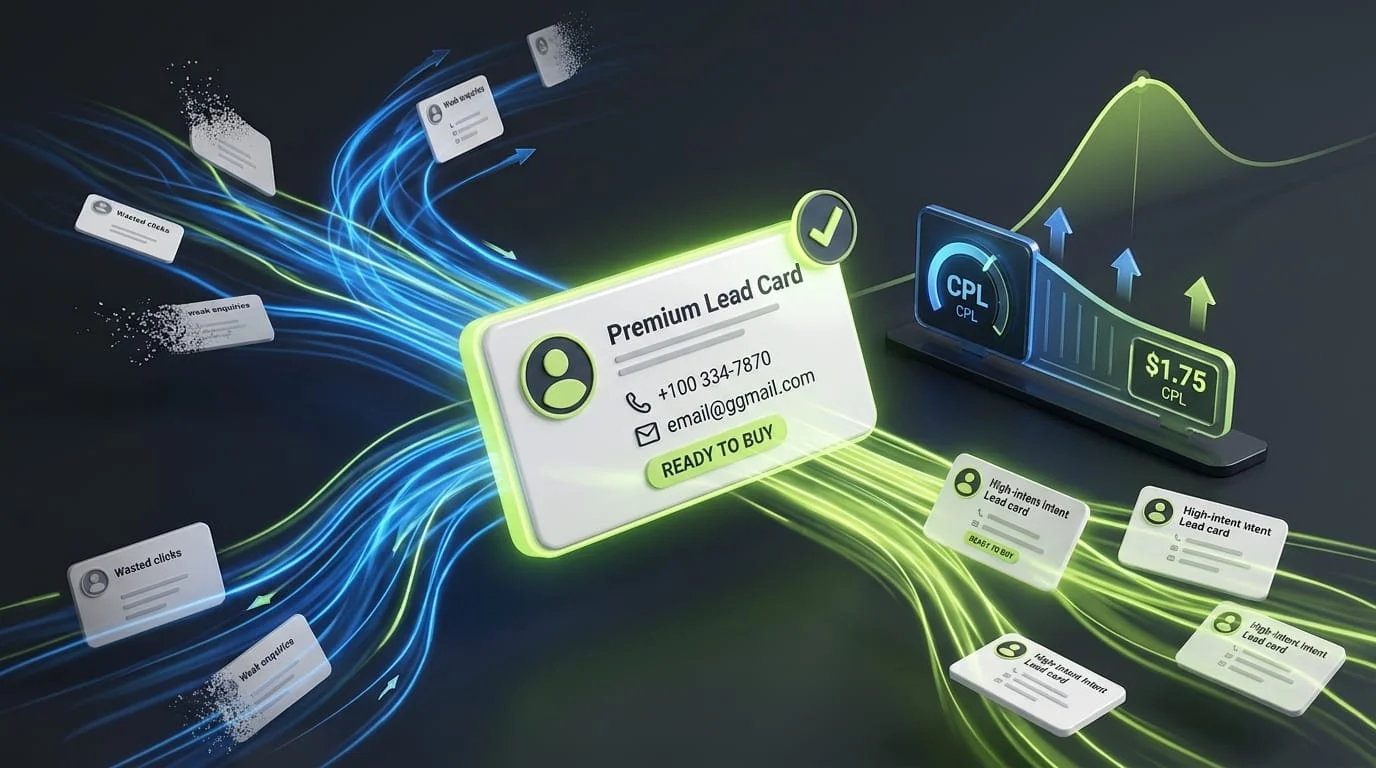
Reducing cost per lead sounds simple: spend less and generate the same number of enquiries. In reality, cutting CPL too aggressively can fill a sales pipeline with cheaper but much weaker leads. The objective is efficiency without destroying intent.
A better Google Ads strategy reduces wasted spend while protecting the searches, audiences and conversion signals that produce customers your business can actually close.
Start With the Right Definition of a Conversion
Before trying to reduce CPL, make sure Google Ads is optimizing toward actions that have real value.
If every button click, short phone call or low-intent form is counted as a primary conversion, automated bidding may learn that those easy actions are exactly what you want.
For lead generation, stronger signals can include qualified enquiries, meaningful calls, booked appointments or leads that move further into the sales process.
Cutting the reported CPL means very little if the cost per qualified lead is actually increasing.
Remove Search Traffic That Was Never Likely to Convert
One of the safest ways to lower acquisition costs is to stop paying for searches that have little connection with the offer.
Review search-term data regularly and look for patterns rather than randomly adding hundreds of negative keywords.
Common waste can come from informational searches, job seekers, DIY queries, locations you do not serve or people looking for a completely different price level.
Removing genuine waste is very different from narrowing a campaign so much that it stops discovering new customers.
Improve the Landing Page Before Cutting the Bid
A campaign does not necessarily have a traffic problem just because its CPL is high.
If relevant visitors reach a confusing or generic landing page, reducing bids will not solve the underlying conversion problem.
A stronger landing page should quickly explain what the service is, who it is for, why the company is credible and what the visitor should do next.
Improving conversion rate allows the same advertising spend to create more enquiries without needing cheaper traffic.
Match Search Intent More Closely to the Offer
Search volume alone does not make a keyword valuable.
Commercial queries that closely match the service can cost more per click but still produce a lower cost per qualified lead because visitors arrive with stronger intent.
The goal is to understand which searches consistently turn into serious opportunities and protect them even when their CPC is not the cheapest.
Give Google Better Quality Signals, Not Just More Conversions
Smart Bidding uses conversion data to decide which auctions are worth entering and how aggressively to bid.
If Google receives feedback only when a form is submitted, it cannot easily distinguish between an excellent opportunity and an enquiry that sales immediately rejects.
Feeding stronger qualified-lead or sales signals back into the advertising system can help optimization move toward business value rather than simply toward form volume.
Use Bidding Goals Carefully
Target CPA can be useful when the business has reliable conversion data and understands what a realistic acquisition cost looks like.
But setting an aggressive target simply because you want cheaper leads can restrict auctions and reduce access to useful demand.
Google recommends aligning Smart Bidding with the actual business goal. For advertisers focused on lead quality, qualified or converted leads can provide a more meaningful optimization target than every raw enquiry.
Do Not Judge Performance Too Quickly
Frequent major changes can make it difficult to understand whether an optimization actually helped.
Large bid changes, new targeting, landing-page replacements and conversion changes made at the same time can turn campaign analysis into guesswork.
Change one important part, give the system enough useful data and compare the impact on qualified leads rather than reacting to a few expensive clicks.
Where to Look for CPL Improvements First
Measure Cost per Qualified Lead
Raw CPL should not be the final metric.
Compare how many leads become genuine sales opportunities and calculate what those qualified opportunities actually cost.
A campaign that generates leads at €30 each can be much more profitable than one generating €12 leads if the first campaign consistently attracts customers your sales team can close.
Want Lower Google Ads Costs Without Filling Your Pipeline With Bad Leads?
Bamboo focuses on measurable cost per lead, conversion-focused landing pages and continuous campaign refinement to generate enquiries your business can actually close — not simply the cheapest possible form submissions.
Improve Google Ads Lead GenerationFinal Thought
Reducing cost per lead is valuable only when the leads remain commercially useful.
The strongest improvements usually come from eliminating irrelevant traffic, increasing landing-page conversion rate, improving conversion signals and letting bidding decisions reflect real business value.
Optimize for cheaper qualified opportunities — not simply cheaper leads.


 EN
EN  RU
RU  RO
RO